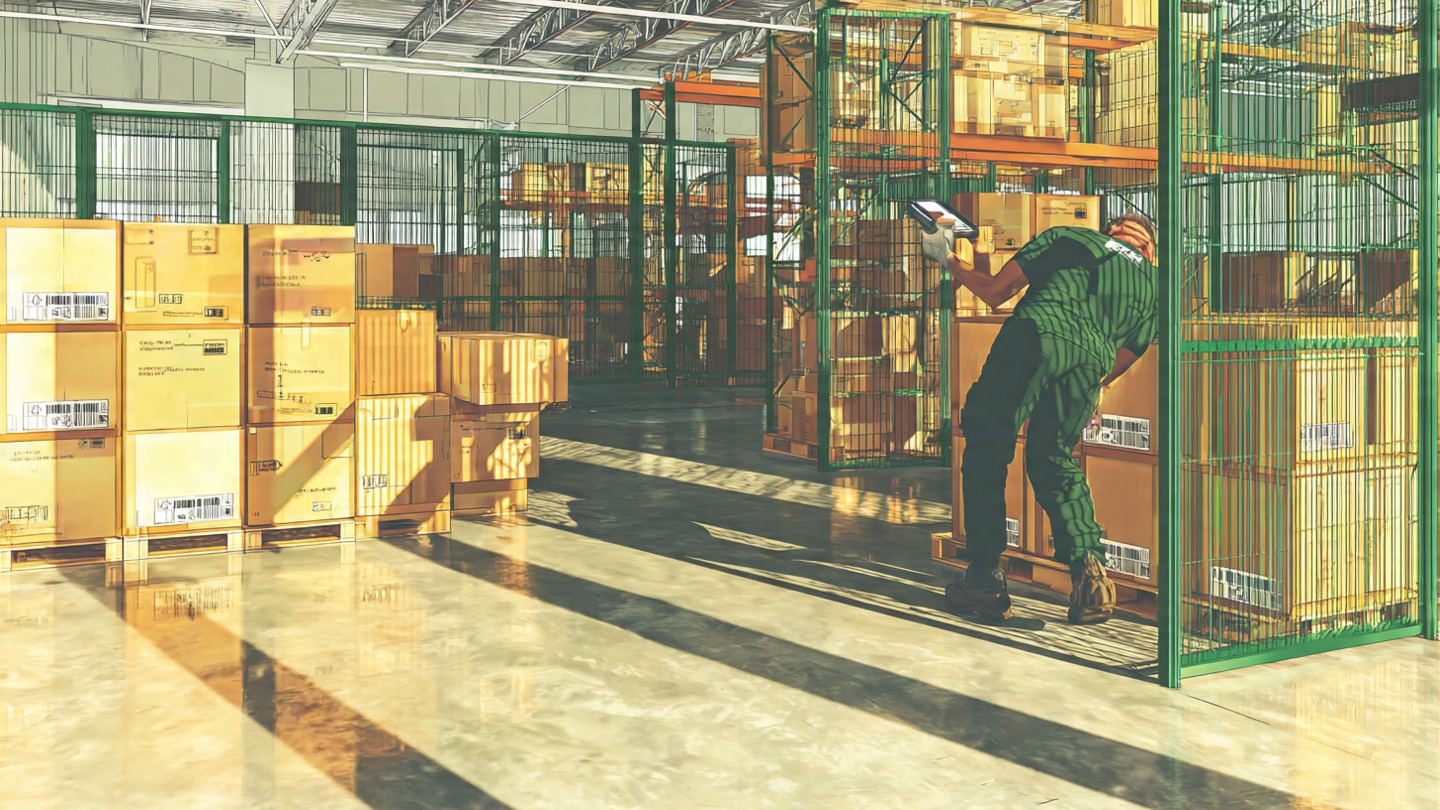
Warehouses keep Minneapolis moving. From industrial corridors near Northeast Minneapolis to distribution hubs along I-94, I-494, and the greater Twin Cities logistics network, local warehouses power retail, manufacturing, medical supplies, and e-commerce fulfillment across Minnesota and the Midwest.
But none of that works efficiently without a strong warehouse storage system, your racking system. A well-designed storage setup does more than keep products off the floor. It supports faster picking, safer workflows, smoother inventory control, and scalable growth. Unfortunately, even durable warehouse racking doesn’t last forever.
If your warehouse storage system has been in place for decades, or if it has been repeatedly repaired, reconfigured, or pushed beyond its original design, you may be risking more than clutter. Outdated racking can lead to slower fulfillment, higher labor costs, safety hazards, and inventory inaccuracies, all things that can silently drain profits.
And here’s what many warehouse operators overlook: modern warehouse upgrades aren’t only about steel and beams. They’re also about technology integration, including RFID, barcode scanning, Warehouse Management Systems (WMS), and inventory tracking tools. That’s where local IT services Minneapolis providers can play a critical role, helping your warehouse storage system work smarter, not harder.
Many warehouse operators also look at physical layout improvements alongside technology upgrades, especially when they want to increase warehouse efficiency with storage racks St. Paul businesses rely on to optimize space and workflow.
Below are the five biggest signs it’s time to update your warehouse storage system, plus practical guidance for warehouses in Minneapolis that want to improve efficiency and reduce risk.
Your Warehouse Can’t Afford Another Slow Day
1) You’re Doing Constant Repairs (and It’s Starting to Add Up)
Every warehouse sees wear and tear. Forklifts bump uprights, pallets scrape beams, and high-traffic zones experience stress over time. But if your routine inspections consistently reveal damage such as:
- bent frames
- cracked welds
- loose anchors
- twisted uprights
- chipped supports
- warped or broken beams
…then repairs may no longer be the most cost-effective solution.
In Minneapolis, warehouses experience seasonal stress patterns too. Winter conditions can affect loading operations and increase the chance of impact damage during dock work. Add busy seasonal shipping cycles like holiday spikes, and a warehouse can quickly expose weaknesses in older racking.
Here’s the key question:
Are you repairing the system occasionally or constantly?
If your repair costs keep climbing, you may be stuck in a cycle where you’re paying to keep an outdated system barely operational. At some point, upgrading becomes the safer and more economical decision.
Why this matters beyond physical structure
When racks are frequently damaged, inventory storage becomes inconsistent. Products may be moved to temporary staging areas, relocated without proper labeling, or stacked in unsafe ways. That creates “invisible inefficiency,” the type of problem that turns into missed shipments, incorrect picks, and costly returns.
This is where local IT services Minneapolis companies often step in:
They can help you implement better inventory tracking and location management, so even during repairs or reconfiguration, your team can still find stock fast.
2) You’re Seeing Beam Deflection (A Serious Safety and Collapse Risk)
Beam deflection happens when beams bend slightly under heavy load. Some deflection can be normal but only temporarily. Once the load is removed, the beam should return to its original form.
If it doesn’t?
That beam may be compromised.
Permanent deflection is one of the most urgent warning signs that your racking system may be unsafe. Even a small structural weakness can increase the risk of sudden collapse, especially when racks are:
- overloaded
- impacted by equipment
- unevenly distributed
- exposed to poor anchoring or damaged baseplates
In a warehouse, collapse risk is never “just a maintenance issue.” It’s a worker safety issue, a liability issue, and an operations interruption issue.
What Minneapolis warehouses should do
If you notice deflection, the best practice is to:
- Remove the load immediately from the affected rack
- Document and measure deflection
- Inspect surrounding beams and uprights
- Consult a qualified racking specialist
- Consider upgrading the rack design for modern loads
Warehouses today often store products differently than they did 20 or 30 years ago. Heavier SKUs, higher volume, or more vertical storage needs may exceed the racking’s original load rating.
A modern upgrade might include:
- better weight distribution
- stronger beams
- improved anchoring systems
- high-density storage designs
And if you upgrade, it’s the ideal time to improve your tracking technology too, with support from local IT services Minneapolis providers.
3) Your Team Struggles to Track Inventory (Even When You “Know” It’s There)
One of the most frustrating warehouse problems is when inventory exists but nobody can locate it quickly.
If your employees frequently say things like:
- “It should be here somewhere.”
- “We saw it last week.”
- “Maybe it’s on the floor.”
- “It might be in overflow.”
…then the storage system may be working against you.
Modern warehouses are entering a new era, often referred to as Industry 4.0. That means automation, real-time data, and smarter workflows. If your storage layout is outdated, unclear, or constantly changing due to patchwork repairs, your team will spend too much time searching instead of picking.
Racking systems and IT must work together
It’s difficult to optimize inventory tracking when:
- Rack labels are missing or inconsistent
- aisles aren’t logically organized
- storage locations don’t match system records
- shelves are damaged or uneven
- overflow zones become “temporary permanent” storage
This is where local IT services Minneapolis can provide a real advantage. With the right IT partner, warehouses can implement:
- barcode scanning systems
- RFID tracking tools
- mobile picking devices
- WMS integration
- inventory dashboards and alerts
- ERP connectivity for purchasing and fulfillment
Even a simple improvement like standardized location naming and barcode labeling can reduce picking errors and improve fulfillment speed dramatically.
4) Productivity Is Slowly Declining (Even With Good Staff)
When warehouse performance drops over time, many businesses assume it’s a staffing issue.
But often, the real problem is the infrastructure.
If your racking system creates bottlenecks such as narrow aisles, awkward layouts, or hard-to-reach storage, your team’s productivity will decline even if your employees are doing their best.
Signs your racking layout is reducing productivity
- forklifts can’t easily maneuver
- pickers walk too far between zones
- frequently ordered items aren’t near shipping
- stock ends up staged on the floor
- equipment is forced into tight spaces
- replenishment takes too long
Over the years, these inefficiencies have become normalized. Teams adapt, but the warehouse stays slower than it should be.
Why layout matters for Minneapolis operations
Minneapolis warehouses often balance multiple operational needs: manufacturing support, retail distribution, and seasonal demand. If your racking system isn’t designed for your current workload, you may experience higher overtime costs and delayed shipments during peak periods.
Upgrading your warehouse storage system can improve:
- access to fast-moving inventory
- equipment traffic flow
- staging and replenishment patterns
- safety zones and spacing
- overall fulfillment performance
And when paired with modern inventory software supported by local IT services Minneapolis, you can also gain:
- faster pick-to-ship cycles
- fewer stockouts
- reduced mispicks
- better forecasting and reporting
5) You’re Out of Space (But Expanding Isn’t an Option)
One of the clearest signs it’s time to upgrade is when you’ve run out of space.
In a growing metro like Minneapolis, warehouse expansion can be expensive. Commercial real estate costs, construction timelines, permits, and operational disruption make expanding your footprint challenging.
But newer storage systems often allow you to do more with what you already have.
Modern racking systems can unlock vertical space
High-density storage solutions can include:
- taller selective racking
- narrow aisle racking
- pallet flow racks
- push-back racks
- cantilever systems
- mezzanine storage
- automated or semi-automated solutions
By optimizing vertical capacity and redesigning your warehouse layout, you can increase storage without adding square footage.
Pair storage expansion with smarter inventory systems
If you increase capacity but don’t improve tracking, you might simply create a bigger maze.
That’s why many Minneapolis warehouse operators work with local IT services Minneapolis to support warehouse upgrades with:
- improved WMS configuration
- location accuracy
- handheld device deployment
- wireless network optimization
- inventory auditing tools
- system integration with shipping platforms
When your storage system and IT infrastructure evolve together, you get a warehouse that is not only larger but also easier to manage.
Why Warehouse Storage Upgrades Today Require IT Support
In 2019, warehouses were already evolving. In 2026, the shift is even more pronounced. Customers expect faster delivery, tighter inventory accuracy, and fewer errors. Companies that rely on outdated racking and manual tracking face serious disadvantages.
Warehouse racking upgrades are no longer just physical changes; they’re operational transformations.
That’s why working with local IT services Minneapolis can help ensure your upgrade improves:
- connectivity (Wi-Fi and device coverage)
- scanning reliability
- inventory visibility
- systems integration (WMS + ERP + shipping tools)
- reporting and automation opportunities
IT support is especially critical if you plan to introduce:
- RFID
- cloud-based WMS platforms
- real-time inventory monitoring
- analytics dashboards
- automated picking systems
- IoT sensors for warehouse tracking
With the right team, your storage system becomes part of a connected warehouse environment where inventory is easy to locate, and fulfillment stays fast—even during seasonal demand.
Final Thoughts: When to Upgrade Your Warehouse Storage System in Minneapolis
If your warehouse is experiencing any of these warning signs:
- constant repairs
- beam deflection
- difficulty tracking stock
- productivity decline
- lack of space
…it’s worth doing a serious evaluation. Waiting too long can lead to safety hazards, fulfillment delays, and rising operational costs.
For Minneapolis warehouse operators, the best time to upgrade is before small issues become major disruptions. And if you’re planning a racking upgrade, it’s also the perfect moment to modernize warehouse technology, especially with help from local IT services Minneapolis providers who understand how to support logistics operations.
A smarter warehouse isn’t just stronger steel. It’s better visibility, better tracking, and better performance.
Ready for faster, safer IT this month?
Book a free system optimization review and get clear next steps within 30 minutes.
Book My Free Optimization →FAQ
1: How do I know if my warehouse racking system is unsafe?
If you notice bent uprights, beam deflection that doesn’t return to normal, missing anchors, or repeated repairs, your racking may be compromised and should be professionally inspected.
2: Can an outdated warehouse storage system affect inventory accuracy?
Yes. Poor layout, inconsistent labeling, and damaged racks often cause misplaced stock, inaccurate counts, and slower picking especially without barcode or RFID systems.
3: What IT upgrades should be done alongside a warehouse racking upgrade?
Common IT improvements include warehouse Wi-Fi strengthening, barcode/RFID scanning deployment, WMS configuration, ERP integration, and improved location tracking.
4: Do local IT services Minneapolis providers support warehouse management systems (WMS)?
Many do. A qualified provider can help with WMS implementation, scanner setup, inventory location mapping, data reporting, and user support.
5: Can upgrading racking help me avoid expanding my warehouse?
Often yes. Modern systems maximize vertical space, improve layout efficiency, and reduce wasted floor areas, making more capacity possible within the same footprint.
6: Why should warehouses use local IT services Minneapolis instead of remote-only support?
Local providers can offer faster on-site response, better understanding of Minneapolis-area operational needs, and hands-on support for network, hardware, and scanning systems.